Winterthur Barcelona Video 104 Philadelphia 76ers 99 videos shaquille o'neal
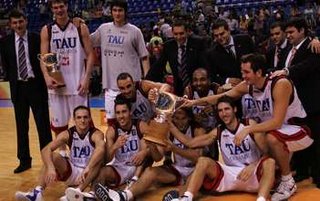
Winterthur Barcelona made history by winning on the basis of caste to win and Philadelphia 76ers, and thus become the first English team to win an NBA team.
A priori not look good he finds to the club after their disastrous start to the season, but still showed all the quality you have before a Philadelphia 76ers degreasing.
started the game badly, with a clear dominance of the whole NBA, especially on the boards, where Webber and Dalembert overwhelmingly dominated a weak-willed and a Vazquez Marconato, managed to open the scoring gap (6-16 at minute 5) .
But in a moment which completely transformed Barcelona, \u200b\u200bjekyll and mr hyde,
and managed to trace the marker thanks to an impressive and the desire Lacovic
Navarro. Since that time Barcelona was messing in the match, thanks in part to public reaction in the wake of several (and suspects) refereeing errors.
In the 3 rd and 4 th period equal the score was the general trend, except in the final minutes in the triple Kakioucis, basile and Navarro and Vazquez quality notes sentenced able to stop the match. Video
Winterthur Barcelona Philadelphia 76ers
Winterthur Barcelona Philadelphia 76ers Sheet
Winterthur Barcelona 104 (29 +22 +23 +30): Lakovic (17), Navarro (18), De la Fuente (2), Vazquez (15), Marconato (10)-starting five-Kasun (4), Basile (17), Ukic (5), Kakioucis (15), Grimau (1) and Trias (-). Philadelphia 76ers
99 (30 +21 +22 +26): Iverson (13), Green (6), Iguolada (13), Webber (19), Dalembert (21)-starting five-Korver (13), Randolph (2), Hunter (2), Carney (4), McFarlin (6), Jones (-) and Ollie (-). Winterthur Barcelona
video Philadelphia 76ers
Friday, October 6, 2006
Wednesday, October 4, 2006
Mesa Rectifier Preamp
undoubtedly the best pivot in the world. All
a force of nature almost impossible to stop in the area.
muscle, speed, and intimidation are their strengths.
His only lake, their ominous free throw percentages. Shaquille O'Neal
Tab Position: Pivot
Date of birth: 03/06/1972 New Jersey
Height 2.16 m.
Weight 158 \u200b\u200bkilos.
position in the draft: 1 1992
Teams: Orlando Magic, Los Angeles Lakers, Miami Heat Shaquille O'Neal
Videos
Energy Bars To Curve Appetite
Tables Brokerbasket
Here you brokerbasket tables the supermanager of ACB.COM. Thanks to these tables
podreis vuesta classification up to the broker supermanager game.
The tables are separated by foundations, eaves and pivots and each of the tables
you could see the rating points you need every player to increase or decrease by 15% its value in the broker.
Week 2 Week 3 Week 3
Week 4 Week 5 Week 6
Week 7 Week 8 Week 9
Here you brokerbasket tables the supermanager of ACB.COM. Thanks to these tables
podreis vuesta classification up to the broker supermanager game.
The tables are separated by foundations, eaves and pivots and each of the tables
you could see the rating points you need every player to increase or decrease by 15% its value in the broker.
Week 2 Week 3 Week 3
Week 4 Week 5 Week 6
Week 7 Week 8 Week 9
Monday, October 2, 2006
Brazilian Wax For Men In Pittsburgh
ACB Week 1: video, scores, stats, standings
kicks off second best basketball league in the world without many surprises.
keys Week 1
ACB Real Madrid crushed to unicaja playing EQUIPMENT (something completely different style Malkovic) and the surprise performance of Ratko Varda. Tau Ceramica
in a crushing win Pamesa game by San "Priogioni"
Barca is only able to get 51 points and his bad play is contagious even to Navarro. Influence of the young
Miso, Saul Blanco, Pablo Aguilar, Javier Beira, Alfonso Sanchez, Ricky Rubio.
The good match of the pair of bases of Akasvayu, McDonald and Marko Marinovic.
The MVP of the day: Milojevic (27 points, 9 rebounds)
The great game of "machine gun" Videnov, showing that Madrid could err by failing to renew. Week 1 Results
ACB Basketball League
Real Madrid - Unicaja 85 to 56
Fuenlabrada - CB Granada 95 to 90
Grupo Capitol Valladolid - Akasvayu Girona from 74 to 75
Gran Canaria Grupo Dunas - Polaris World Murcia 75 to 67
Etos Alicante - FC Barcelona 58 to 51
Pamesa Valencia - TAU Cerámica 94 to 95
DKV Joventut - ViveMenorca 89 to 72
Caja San Fernando - MMT Estudiantes 86-88
Bruesa GBC - Lagun Aro Bilbao Basket from 54 to 59
STATISTICS POINT
1 Milojevic (PAM) 27
2 Videnov (CSF) 27
3 T. Myers (MUR) 26
4 Eley (VLL) 24
5 Jasen (EST) 23 REBOUNDS
1
Gaines (DKV) 13
2 Eley (VLL) 12 Davis
3 (GBC) 12
4 Bunting (MUR) 11
5 Thompson (MUR) 10
1 ASSISTS L. Angulo (ALI) 7
2 Prigioni (TAU) 6
3 Price, H. (CSF) 6
4 Basile (BAR) 6 5 McDonald
(GIR) 5
kicks off second best basketball league in the world without many surprises.
keys Week 1
ACB Real Madrid crushed to unicaja playing EQUIPMENT (something completely different style Malkovic) and the surprise performance of Ratko Varda. Tau Ceramica
in a crushing win Pamesa game by San "Priogioni"
Barca is only able to get 51 points and his bad play is contagious even to Navarro. Influence of the young
Miso, Saul Blanco, Pablo Aguilar, Javier Beira, Alfonso Sanchez, Ricky Rubio.
The good match of the pair of bases of Akasvayu, McDonald and Marko Marinovic.
The MVP of the day: Milojevic (27 points, 9 rebounds)
The great game of "machine gun" Videnov, showing that Madrid could err by failing to renew. Week 1 Results
ACB Basketball League
Real Madrid - Unicaja 85 to 56
Fuenlabrada - CB Granada 95 to 90
Grupo Capitol Valladolid - Akasvayu Girona from 74 to 75
Gran Canaria Grupo Dunas - Polaris World Murcia 75 to 67
Etos Alicante - FC Barcelona 58 to 51
Pamesa Valencia - TAU Cerámica 94 to 95
DKV Joventut - ViveMenorca 89 to 72
Caja San Fernando - MMT Estudiantes 86-88
Bruesa GBC - Lagun Aro Bilbao Basket from 54 to 59
STATISTICS POINT
1 Milojevic (PAM) 27
2 Videnov (CSF) 27
3 T. Myers (MUR) 26
4 Eley (VLL) 24
5 Jasen (EST) 23 REBOUNDS
1
Gaines (DKV) 13
2 Eley (VLL) 12 Davis
3 (GBC) 12
4 Bunting (MUR) 11
5 Thompson (MUR) 10
1 ASSISTS L. Angulo (ALI) 7
2 Prigioni (TAU) 6
3 Price, H. (CSF) 6
4 Basile (BAR) 6 5 McDonald
(GIR) 5
Wednesday, September 27, 2006
Long Island/gay Cruising Spots
Templates Template Real Madrid
After last season's disastrous Madrid presents a radical change in philosophy.
If it is true that the quality seems a notch below Tau, Barcelona and Unicaja, we have a team more balanced
finally has 2 pure bases.
Despite having an inexperienced coach Real Madrid will present a more logical
with more weapons to "give the ball a bullock or Rakocevic.
madrid basketball will see a more attractive, her new identity Senar: counterattack and defense.
Strengths: Team play, pure bases and intelligent, and progression of young people (Thomas, Sinanovic and Hervelle)
Weaknesses: poor interior and rookie game (with the exception of Kings)
Real Madrid Squad
BASES Raul Lopez 1.82 72 kg, 26 years 8.9 points per game 45% triple
Kerem Tunceri 1.90 28 years 14.4 points, 5.25 assists and 3.6 rebounds per game in ULEB
The League MVP ALERO
Turkish
Charles Smith 1.93 30 years 20.6 points per game in Euroleague
Alex Mumbrú 2.02 100 Kg, 27 years 10.6 points per game
Louis Bullock 1.85 88 kg, 30 years 16.7 39% pts triple Marko Tomas
2.1 m 88 kg, 21 years
Pivots
Axel Hervelle 2.5 99 kg, 23 pts and 5.3 rebounds 8.6
112 kg 2.3 Felipe Reyes, 26 pts and 8 11.2 Edu Hernandez
rebounds Sonseca 2.12 110 kg, 23 years 4 pts and 10 minutes
Venson Hamilton 02.05 109 kg, 29 pts and 5.3 rebounds 5.6
Nenad Sinanovic 2.20 102 kg, 23years
HIGH
K. Tunceri (Besiktas) , R. Lopez (Akasvayu), A. Mumbru (DKV), C. Smith (Efes P.)
LOWER
Sonko (Etos), Rakocevic (Tau), Gelabale (Seattle), O. Gonzalez (Ricoh Manresa), H. Garcia (Breogán) JAAntelo
(Lagun Aro), A. Scales (Aris Thessaloniki), F. Videnov (Box SF).
After last season's disastrous Madrid presents a radical change in philosophy.
If it is true that the quality seems a notch below Tau, Barcelona and Unicaja, we have a team more balanced
finally has 2 pure bases.
Despite having an inexperienced coach Real Madrid will present a more logical
with more weapons to "give the ball a bullock or Rakocevic.
madrid basketball will see a more attractive, her new identity Senar: counterattack and defense.
Strengths: Team play, pure bases and intelligent, and progression of young people (Thomas, Sinanovic and Hervelle)
Weaknesses: poor interior and rookie game (with the exception of Kings)
Real Madrid Squad
BASES Raul Lopez 1.82 72 kg, 26 years 8.9 points per game 45% triple
Kerem Tunceri 1.90 28 years 14.4 points, 5.25 assists and 3.6 rebounds per game in ULEB
The League MVP ALERO
Turkish
Charles Smith 1.93 30 years 20.6 points per game in Euroleague
Alex Mumbrú 2.02 100 Kg, 27 years 10.6 points per game
Louis Bullock 1.85 88 kg, 30 years 16.7 39% pts triple Marko Tomas
2.1 m 88 kg, 21 years
Pivots
Axel Hervelle 2.5 99 kg, 23 pts and 5.3 rebounds 8.6
112 kg 2.3 Felipe Reyes, 26 pts and 8 11.2 Edu Hernandez
rebounds Sonseca 2.12 110 kg, 23 years 4 pts and 10 minutes
Venson Hamilton 02.05 109 kg, 29 pts and 5.3 rebounds 5.6
Nenad Sinanovic 2.20 102 kg, 23years
HIGH
K. Tunceri (Besiktas) , R. Lopez (Akasvayu), A. Mumbru (DKV), C. Smith (Efes P.)
LOWER
Sonko (Etos), Rakocevic (Tau), Gelabale (Seattle), O. Gonzalez (Ricoh Manresa), H. Garcia (Breogán) JAAntelo
(Lagun Aro), A. Scales (Aris Thessaloniki), F. Videnov (Box SF).
Tech Deck Dudes Thumbs
Akasvayu Girona
Season
major changes in Girona. After the emergence of new patricinador, the revolution of the signings, and the results of these (a mediocre season), Akasvayu changes to most of its staff this year.
Despite this occurs much more competitive and higher quality and top it all this with one of the coaches intended Pesic
TEMPLATE Akasvayu Girona
BASES
Victor Sada 1.92 1.83 90 22
Marinovic 23 years 12.4 points and 3.1 assists
Arriel McDonald 1.89 80 34 years
ALERO
Kyle Hill 27 years 1.88 1.92
M. Thornton 29 years
D. Salenga 1.97 85 29 years
Pivots
Darryl Middleton
2.02 years 1.98 105 Fernando San Emeterio
Gregor Fucka 22 years 35 years 15.2 102 15.2
Marc Gasol
Dalibor Bagaric 127 21 2.16 7.84 26 years 131 kg points and 4.9 rebounds per game. Gabriel German
111 7.2 25 years
HIGH
Marinovic (FMP Zeleznik), M. Thornton, G. Fucka, V. Sada and M. Gasol (Barcelona), F. San Emeterio (Valladolid), D. Bagaric ( F. Bologna), Kyle Hill (Snaidero Udine), Middleton (Dynamo SP).
LOWER
Myers and K. Thompson (Polaris Murcia), S. Udrih (Granada), F. Vázquez (Barcelona W.), R. López (R. Madrid), T. Espinosa, M. Carter, F. Kammerichs ( Bruesa)
Season major changes in Girona. After the emergence of new patricinador, the revolution of the signings, and the results of these (a mediocre season), Akasvayu changes to most of its staff this year.
Despite this occurs much more competitive and higher quality and top it all this with one of the coaches intended Pesic
TEMPLATE Akasvayu Girona
BASES
Victor Sada 1.92 1.83 90 22
Marinovic 23 years 12.4 points and 3.1 assists
Arriel McDonald 1.89 80 34 years
ALERO
Kyle Hill 27 years 1.88 1.92
M. Thornton 29 years
D. Salenga 1.97 85 29 years
Pivots
Darryl Middleton
2.02 years 1.98 105 Fernando San Emeterio
Gregor Fucka 22 years 35 years 15.2 102 15.2
Marc Gasol
Dalibor Bagaric 127 21 2.16 7.84 26 years 131 kg points and 4.9 rebounds per game. Gabriel German
111 7.2 25 years
HIGH
Marinovic (FMP Zeleznik), M. Thornton, G. Fucka, V. Sada and M. Gasol (Barcelona), F. San Emeterio (Valladolid), D. Bagaric ( F. Bologna), Kyle Hill (Snaidero Udine), Middleton (Dynamo SP).
LOWER
Myers and K. Thompson (Polaris Murcia), S. Udrih (Granada), F. Vázquez (Barcelona W.), R. López (R. Madrid), T. Espinosa, M. Carter, F. Kammerichs ( Bruesa)
Tuesday, September 26, 2006
Ross Kemp Return To Afghanistan Watch Online
Videos Super Slam Dunk Contest 2006
Despite presented a three-point shootout with lower quality than other years,
we saw a great show, we had 360 º turns, tomahawks or grinders, and a lot of originality and
was this that gave the victory to Pietrus, thanks to a pass from the 2 nd stairways picked
Pietrus and crushed against the rim.
dunk contest video 2006
contest final scores MIRZA
math +44,5 +45,5 Teletovic 42 45.5 TOTAL Score
SAUL WHITE TOTAL 41 51 25 51 Score Florent Pietrus
46 TOTAL 52.5 47.5 52.5 Avg
CHARLES GAINES 47 44 50 TOTAL 50
Score
Tags: Super basketball basket
Despite presented a three-point shootout with lower quality than other years,
we saw a great show, we had 360 º turns, tomahawks or grinders, and a lot of originality and
was this that gave the victory to Pietrus, thanks to a pass from the 2 nd stairways picked
Pietrus and crushed against the rim.
dunk contest video 2006
contest final scores MIRZA
math +44,5 +45,5 Teletovic 42 45.5 TOTAL Score
SAUL WHITE TOTAL 41 51 25 51 Score Florent Pietrus
46 TOTAL 52.5 47.5 52.5 Avg
CHARLES GAINES 47 44 50 TOTAL 50
Score
Tags: Super basketball basket
Monday, September 25, 2006
How Much Blood Did America Use In 2010
ACB Statistics, videos, Super results (Tau Baskonia champion)
Tau Ceramica of the Supercup champion Tau Ceramica
takes revenge of the last final and ACB Super
wins by 78-83 (MVP Tiago Splitter)
Unicaja Malaga in the semifinals at DKV Joventut won by 74-66 in a closely fought match and the
Tau Ceramica Barcelona crushed to a lack of experience.
Pietros Bullock and take the Slam Dunk Contest and triple
Bullock wins his second title of Winning
triples in the final Garnett (Students) for 26 to 19 pts.
Regarding the dunk contest, Pietrus was won, taking over from his compatriot
Gelabale in the final defeating Charles Gaines with a fantastic pass from Matt Pepe Sanchez! From the second tier!. A highlight
The plantillazo of Tau.
The lack of conjunction of Barcelona. The apparent recovery
Rakocevic.
The lack of inner game of Unicaja (Carlos Jimenez played the power forward)
The fighting capacity DKV Joventut
The TAU has been in the last five finals ACB (two Super Cups, a Copa del Rey final and two league ACB)
Statistics
Unicaja Malaga 78 (18 +21 +18 +21): Sanchez (5), Rodriguez (18), Jimenez (14), Welsch (13), De Miguel (-)-starting five-, Vasileiadis (8), Cabezas (-), Pietrus (10) and Lorbek (10). Tau Vitoria
83 (21 +18 +19 +25): Planinic (3), House (16), Rakocevic (15), Fajardo (2), Splitter (19)-starting five-, Prigioni (14), Vidal ( 7), Teletovic (5) and Peker (2).
Videos Super
The best move of the weekend
Super slam dunk contest video acb
Tags: Super basketball basket
Tau Ceramica of the Supercup champion Tau Ceramica
takes revenge of the last final and ACB Super
wins by 78-83 (MVP Tiago Splitter)
Unicaja Malaga in the semifinals at DKV Joventut won by 74-66 in a closely fought match and the
Tau Ceramica Barcelona crushed to a lack of experience.
Pietros Bullock and take the Slam Dunk Contest and triple
Bullock wins his second title of Winning
triples in the final Garnett (Students) for 26 to 19 pts.
Regarding the dunk contest, Pietrus was won, taking over from his compatriot
Gelabale in the final defeating Charles Gaines with a fantastic pass from Matt Pepe Sanchez! From the second tier!. A highlight
The plantillazo of Tau.
The lack of conjunction of Barcelona. The apparent recovery
Rakocevic.
The lack of inner game of Unicaja (Carlos Jimenez played the power forward)
The fighting capacity DKV Joventut
The TAU has been in the last five finals ACB (two Super Cups, a Copa del Rey final and two league ACB)
Statistics
Unicaja Malaga 78 (18 +21 +18 +21): Sanchez (5), Rodriguez (18), Jimenez (14), Welsch (13), De Miguel (-)-starting five-, Vasileiadis (8), Cabezas (-), Pietrus (10) and Lorbek (10). Tau Vitoria
83 (21 +18 +19 +25): Planinic (3), House (16), Rakocevic (15), Fajardo (2), Splitter (19)-starting five-, Prigioni (14), Vidal ( 7), Teletovic (5) and Peker (2).
Videos Super
The best move of the weekend
Super slam dunk contest video acb
Tags: Super basketball basket
Friday, September 22, 2006
Kate Playground Gratis
Supercopa ACB signings, ACB Supercopa low
Transfers
Unicaja has signed for 3 months to Robert Gulyas, pivot of 2.13 m and many kilos.
vetareno Gulyas is a pivot of 32 years whose virtues are good hand, experience and good moves for their weight. Last year in the Ulker Istanbul (Turkey), average 9.12 pts in 20 minutes, and bring his 5 rebounds per game.
obviously is not a pivot level of Santiago, but bring work safely better attitude than this.
pivots at the low to high in the market, unicaja intention seems clear, if you are looking to pivor certainly will not renew. Low
Unicaja: Brown
Tau: Erdogan and Scola
Curiosities
Roko Ukic will face his former team eager to prove themselves
We mourn the Czech Republic's top two players in the final pre-European: Barton vs Welsch
Tau Vitoria won every game he (6) officers to Barca last year. Debut
these players: Welsch, Lorbek, Iñaki de Miguel, Kaya Peker, Mirza Teletovic, Frederick House, Zoran Planinic, Kasun, Vazquez, Lakovic, Laviña, Gaines, Sullivan.
Palmares and history of the Super 2005 Supercopa ACB
Granada: Tau Baskonia 61 - Granada 55 Malaga
Supercup 2004: Winterthur Barcelona 76 - Real Madrid 75
Transfers
Unicaja has signed for 3 months to Robert Gulyas, pivot of 2.13 m and many kilos.
vetareno Gulyas is a pivot of 32 years whose virtues are good hand, experience and good moves for their weight. Last year in the Ulker Istanbul (Turkey), average 9.12 pts in 20 minutes, and bring his 5 rebounds per game.
obviously is not a pivot level of Santiago, but bring work safely better attitude than this.
pivots at the low to high in the market, unicaja intention seems clear, if you are looking to pivor certainly will not renew. Low
Unicaja: Brown
Tau: Erdogan and Scola
Curiosities
Roko Ukic will face his former team eager to prove themselves
We mourn the Czech Republic's top two players in the final pre-European: Barton vs Welsch
Tau Vitoria won every game he (6) officers to Barca last year. Debut
these players: Welsch, Lorbek, Iñaki de Miguel, Kaya Peker, Mirza Teletovic, Frederick House, Zoran Planinic, Kasun, Vazquez, Lakovic, Laviña, Gaines, Sullivan.
Palmares and history of the Super 2005 Supercopa ACB
Granada: Tau Baskonia 61 - Granada 55 Malaga
Supercup 2004: Winterthur Barcelona 76 - Real Madrid 75
Thursday, February 23, 2006
Spider Bade Misty Mundae E4
Works, Biography
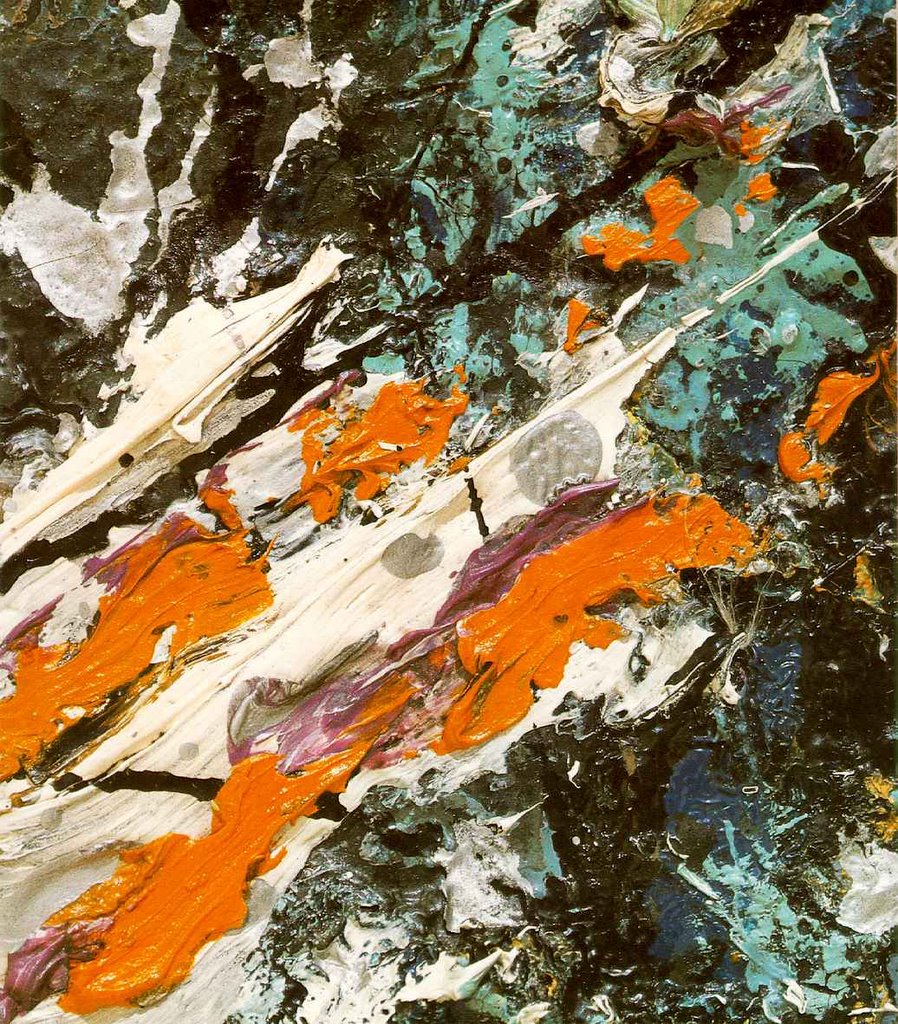
American painter, the most prominent member of Abstract Expressionism. Born in Cody, Wyoming and attended the Art Students League of New York with Thomas Hart Benton. He spent several years traveling the country and drawing. In late 1930 and early 1940 in New York collaborated on projects for Administration Federal Art Project (Federal Art Project). His early works, in the naturalistic style of Benton, Americans depicting scenes realistically. Between 1943 and 1947 Pollock, influenced by surrealism, adopted a more free and abstract, as in The Little Foxes (1943, Museum of Modern Art, New York). In 1947 Pollock evolved into abstract expressionism, developed the technique of action painting or dripping, consisting of pouring, dripping and throwing paint on unstretched canvas. Pollock made by this method interwoven forms schemes as shown in the examples Full fathom five and Lucifer (both 1947, Museum of Modern Art, New York). Also belonging to this time Brown and Silver I (1951, Museo Thyssen-Bornemisza, Madrid). After 1950 his style changed again, returning to figuration in black and white, in a virtuoso style. Among the paintings highlights of your last period grayness Ocean (1953, Solomon R. Guggenheim Museum, New York). He died on August 11, 1956 following an automobile accident.
Friday, February 10, 2006
Appraisal Of Silver Ware
Platon, Platon
"Finding the good of our neighbors, we find our"
.
"Every tear teaches deadly truth"
.
"When a crowd in authority, is more cruel even than the tyrants
.
"is a kind of virtue, evil, many"
.
"We must look to our problems other cause than God"
.
"Where love reigns, of the laws "
.
" Where it is established that it is shameful to be involved in sexual relationships with men, this is due to evil on the part of rulers, and cowardice on the part of the governed "
.
" Love is feeling that beats within the sacred being loved "
.
" The wise man speaks with authority as he directs his own life "
.
" The man who makes everything that leads to happiness depends upon himself, and not others has adopted the best plan for living happily "
.
" The wise man always want to be with anyone better than him "
.
"The goal of education is virtue and the desire to become a good citizen"
.
"He who learns and learns and does not practice what he knows, is like one who plows and plows and sows not"
.
"Time is a moving image of eternity"
.
"Cold and tasteless is the consolation when not involved in any remedy"
.
"The conquest itself is the greatest of victories"
.
"Freedom lies in being masters of their own lives"
.
"The greatest declaration of love is not done, the man who feels much, speak little "
.
" Opportunity is the precise moment that we receive or do something "
.
" Poverty does not come from the decline in wealth, but by the multiplication of desires "
.
" Reason and the value will always be imposed for treason and ingratitude "
.
" The little I know I owe to my ignorance "
.
" What's yours is mine and what's mine is yours "
.
" Friends often become thieves of our time "
.
" The spirits are not vulgar destination "
.
" Kids should not drink wine, because it is wrong to add fire to fire "
.
" No man is wise enough by himself "
.
" Do not let grow grass in the path of friendship "
.
" There is such a coward man whose love do not transform into a hero brave "
.
" There is not a king who did not descend from a slave or a slave who has not had kings in his family "
.
" There is only one god, and is knowledge, and evil is ignorance "
.
" Everything that is born necessarily from a cause, because nothing can be unjust origin "
.
" A man who risks nothing by their ideas, their ideas are worthless, or worthless man
Porsche Mecanic Problems
Quotes, Biography
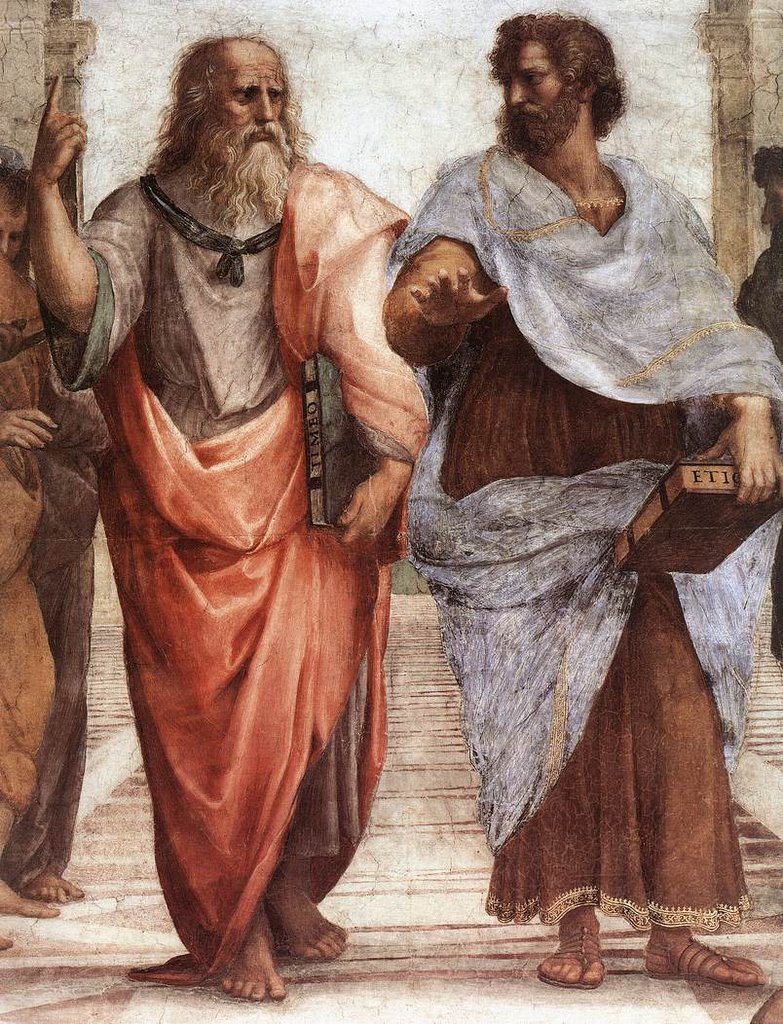
Plato (c. 428-c. 347 BC), Greek philosopher, one of the most original and influential thinkers in the history of philosophy from Plato occidental.La figure is essential for understanding the history of Western thought . The goal of philosophy as well as the very essence of the philosopher in the Platonic system, are Emile Bréhier issues addressed in the following text.
The constitutes the unity of all these forms, which, somehow, the need is the desire to determine the position of the philosopher in the city and its moral and social mission. In the Greece of that time, the philosopher ever defined by comparison with other types of speculation, scientific or religious, but rather by their relationship and their differences with the speaker, the sophist and the political. Philosophy is the discovery of a new form of intellectual life, moreover, is inseparable from social life. The dialogues we describe that life and with it, dramas and comedies that have emerged from it. In some respects, this philosophy clashed with the customs firmly implanted in Greece at the time, it was inevitable conflicts they occur, resulting tragic was the death of Socrates.
What is the philosopher? Plato offers many descriptions. In the Phaedo (64 and ff.) Is the man that has been purified from the defects of the body, which lives only for the soul and not fear death, since in this life, his soul is separated from body. In the Theaetetus (172 c-177 c) is the man clumsy and skilled in their relationships with men who never find their place in human society and lack of influence in the city. In the Republic, is the head of the city and it is he who, in the Laws (X, 909 a), becomes the kind of Inquisitor, wishing "the salvation of the soul" of citizens, requires the inhabitants of the city's belief in the gods of the same under the threat of life imprisonment. It is, finally, the enthusiastic and inspired the Phaedrus (224 a ff.) And the Symposium (210 a). In these descriptions successive two key traits that seem contradictory: on the one hand, the philosopher must "flee from here," purified, live in contact with realities that the sophist or ignore political, on the other hand, must build the just city, whose social relations reflect the exact relationships and stringent are the subject of science. The philosopher, on the one hand, wise removed from the world and, secondly, the wise and just policy that gives the true laws of the city. Plato himself was not it, at once, founder of the Academy, a friend of mathematicians and astronomers and, moreover, an advisor to Dion and Dionysius, the tyrant? Also, if as a philosopher was the inventor or promoter of a rigorous logic, which was also inspired by the spirit remain sterile without the impulse of Eros, and could not breed but the beautiful, reasoned discussion unfolds in a dialectic of love translates into lyrical effusions and mystical contemplation. Sage and mystic, philosopher and politician, are traits typically separated and never get together, through this story, but in some great reformers of the nineteenth century. Therefore it is important to understand well what is your link unión.2. Originally called Aristocles life, Plato (nickname given by the meaning of this term in Greek, "the broad-shouldered") was born into an aristocratic family in Athens. His father, Ariston, was believed to have descended from the early kings of Athens, while his mother, Perictione descended from Dropides, belonging to the family of the sixth century BC lawmaker Solon. His father died when he was still a child and his mother remarried with Pyrilampes, associate of the statesman Pericles. As a young man Plato had political ambitions but he became disillusioned with the rulers of Athens. Later he was a disciple of Socrates, accepting his basic philosophy and dialectical style of debate: the pursuit of truth through questions, answers and more questions. Although this is a very controversial episode, which some scholars consider a literary metaphor about power, Plato witnessed the death of Socrates in the Athenian democratic regime in the year 399 BC, perhaps fearing for his life, some time and left Athens went to Megara and Syracuse.
In 387 BC Plato founded in Athens Academy, an institution often considered the first European university. It provided a comprehensive curriculum, including such subjects as Astronomy, Biology, Mathematics, Political Theory and Philosophy. Aristotle was the most outstanding student.
In order to combine the philosophy and the ability to implement policy reforms went to Sicily in 367 BC, to become tutor of the new tyrant of Syracuse, Dionysius the Younger. The experiment failed. Plato still made a third trip to Syracuse in 361 BC, but again his engagement in Sicilian affairs met with little success. He spent the last years of his life lecturing and writing in the Academy. He died in Athens at an age close to 80 years, possibly in 348 or 347 BC
3.Obra Plato's writings took the form of dialogues, through which were displayed, discussed and criticized philosophical ideas in the context of a conversation or debate involving two or more partners. The first group of Plato's work includes 35 dialogues and 13 letters. Has questioned the authenticity of conversations and most of the cards.
3.1. Early Platonic dialogues dialogues can be divided into four stages of composition. The first is Plato's attempt to communicate the philosophy and dialectical style of Socrates. Some of these dialogues take the same argument. Socrates meets someone who claims to know much, he professes to be ignorant and seeks assistance he claims to know. However, as Socrates begins to raise questions, it is clear that sage who is said not really know what he claims to know, and Socrates emerges as the wiser one because, at least, he knows he knows nothing. That knowledge, of course, is the beginning of wisdom. Within this group of dialogues are Euthyphro (a consideration of the nature of piety and religion) Laques (una búsqueda del significado del valor), Cármides (un intento por definir la templanza), la Apología de Sócrates (donde narra la defensa que de sí mismo ejerció Sócrates en el juicio que le condujo a la muerte) y Protágoras (una defensa de la tesis de que la virtud es conocimiento y que es posible aprenderla).
3.2. Diálogos de transición, madurez y vejez Los diálogos de los periodos intermedio y último de la vida de Platón reflejan su propia evolución filosófica. Las ideas de esas obras se atribuyen al propio Platón, aunque Sócrates sigue siendo el personaje principal en muchas de ellas. Los escritos del periodo de transición abarcan, entre otros diálogos, Gorgias (a consideration of several ethical questions), Meno (a discussion of the nature of knowledge), Lysis (a discussion of friendship) and the first book of the Republic (a discussion of justice). Their dialogues
maturity include the Symposium (Plato's outstanding dramatic achievement, which contains several speeches on beauty and love), Cratylus (about language), Phaedo (death scene of Socrates, in which he discusses the theory of ideas, the nature of the soul and the question of immortality), Phaedrus (about beauty and love) and books II to X of the Republic (which are a detailed discussion of the nature of justice).
Among the works of old-age period include the Theaetetus (a denial that knowledge must be identified with sense perception), Parmenides (a critical evaluation of the theory of ideas), The Sophist (further discussion on ideas or Forms), Philebus (discussion of the relationship between pleasure and the good), Timaeus (Plato's ideas about natural science and cosmology) and The Laws (a more practical political and social issues). 4.Teoría
ideas center Plato's philosophy is his theory of forms or ideas. At bottom, the idea of \u200b\u200bknowledge, his ethical theory, his psychology, his concept of the state and his conception of art must be understood from that perspective.
4.1. Theory of Knowledge Theory of the ideas of Plato and his theory of knowledge are so interrelated that must be addressed jointly. Influenced by Socrates, Plato was convinced that knowledge can be attained. He was also convinced of two essential characteristics of knowledge. First, the knowledge must be certain and infallible. Second, knowledge must have as its object what is really real, in contrast to what is only in appearance. As for Plato what is real has to be fixed, permanent and unchanging, he identified the real with the ideal sphere of existence in opposition to the physical world of becoming. One consequence of this approach was his rejection of empiricism, the claim that all knowledge comes from experience. He thought that propositions derived from the experience they have, at most, a degree of probability. Are not true. Moreover, the objects of experience are changeable phenomena of the physical world, therefore the objects of experience are not proper objects of knowledge.
The Plato's theory of knowledge was exposed mainly in the Republic, particularly in his discussion on the image of the divided line and the myth of the cave. In the former, Plato distinguishes between two levels of awareness: opinion and knowledge. Statements or statements about the physical or visible world, including the views and propositions of science are just opinion. Some of these opinions are well founded and not others, but none of them should be seen as true knowledge. The highest point is knowledge, since it involves reason rather than experience. The reason, use of properly, leading to ideas that are true and objects of these rational insights are true universals, the eternal Forms or substances that constitute the real world.
The myth of the cave describes individuals chained in the deepest part of a cave. Tied facing the wall, his vision is limited and therefore can not tell anyone. All you see is the wall of the cave upon which reflect models or statues of animals and objects passing in front of a glowing bonfire. One man runs away and leaves in the light of day. With the help of the Sun, this person first sees the real world and returns to the cave, saying that the only things they have seen so far are shadows and appearances and the real world awaits them abroad if they want to discharge their ties. The world of shadows of the cave symbolizes for Plato the physical world appearances. The trip to the sunny world is outside the cave symbolizes the transition into the real world, the world of full and perfect existence, which is the object of knowledge.
4.2. Nature of ideas Theory of ideas can be better understood in terms of mathematical entities. A circle, for example, is defined as a plane figure composed of a series of points all equidistant from one place. However, nobody has actually seen the figure.
What people have seen are drawn figures that are more or less accurate approximations of the ideal circle. In fact, when mathematicians define a circle, the points referred to are not spatial, but logical. No space. However, although the shape of a circle is not ever seen-and you can not see ever-mathematicians and others do know what it is. For Plato, therefore, form a circle there, but not in the physical world of space and time. There is an immutable object in the field of ideas, which can only be known by reason. The ideas are more entity objects in the physical world both because of their perfection and stability and the fact of being role models, similarities to objects that have common physical reality. Circular shapes, square and triangular are excellent examples of what Plato meant by idea. An object that exists in the physical world can be called a circle, square, triangle, because it seems ("participate" in the words of Plato) to the idea of \u200b\u200ba circle, square or triangle.
Plato extended his theory beyond the field of mathematics. Actually, I was more interested in its application in the field of social ethics. The theory was his way of explaining how the same universal term can refer to many things or particular events. The word justice, for example, can apply to hundreds of specific actions because these acts have something in common, they seem to, participate in, the idea of \u200b\u200bjustice. A person is human because it resembles or participates in, the idea of \u200b\u200bhumanity. If humanity is defined in terms of being a rational animal, then a person is human because it is rational. A particular act may be considered brave or coward because part of that idea. An object is beautiful because it partakes of the idea, or form, of beauty. Therefore, everything in the world of space and time is what it is by virtue of its resemblance to its universal idea. The ability to define the universal term is evidence that it has mastered the idea to which that universal refers.
Plato conceived the ideas in a hierarchical fashion: the supreme idea of \u200b\u200bGod is like the sun in the myth of cave, illuminates all the other ideas. The idea of \u200b\u200bGod represents the passage of Plato in the direction of an ultimate principle of explanation. At bottom, the theory of ideas is intended to explain the way in which one reaches the knowledge and also how things have become what they are. In philosophical language, the theory of Plato's ideas is both an epistemological theory (theory of knowledge) as an ontological thesis (theory of being).
political 5.Teoría Republic, most political work of Plato, is the question of justice and therefore the questions what is a fair state? and who is an individual right?
The ideal state, according to Plato, consists of three classes. The economic structure of the state lies in the merchant class. Security, military and political leadership is assumed by the philosopher-kings. The class a person is determined by an educational process that begins at birth and continues until that person has reached the highest level of education compatible with their interests and abilities. Those who complete the entire educational process become philosopher-kings. Are those whose minds have developed as they are able to understand the ideas and, therefore, make the wisest decisions. In fact, the educational system Plato's ideal is primarily structured to produce philosopher-kings.
associated the traditional Greek virtues with the class structure of the ideal state. Temperance is the only virtue of the artisan class, the value is under the military class and wisdom characterizes the rulers. Justice, the fourth virtue, characterizes society as a whole. The just state is one in which each class must perform its own function without going into the activities of other classes. Plato
applied to the analysis of the human soul a similar pattern: the rational, the will and appetites. A righteous person is one whose rational element, supported by the will, controls appetite. There is a clear analogy with the previous state structure, in which the philosopher-kings, aided by the soldiers, govern the rest of society.
6.Ética Plato's ethical theory rests on the assumption that virtue is knowledge and it can be learned. This doctrine must be understood in the whole of his theory of ideas. As already mentioned, the latest idea for Plato is the idea of \u200b\u200bGod and knowledge of this idea is the guide on the verge of taking a moral decision. He maintained that to know God is doing good. The consequence of this is that anyone who behaves immorally does so from ignorance. This conclusion derives from his certainty that a virtuous person is really happy and as individuals always desire their own happiness, always eager to do what is moral.
7.Arte antagonistic Plato had an idea of \u200b\u200bart and the artist even endorsing some forms of religious art and moralist. His focus has to see once more with his theory of ideas. A beautiful flower, for example, is a copy or imitation of the universal ideas of flowers and beauty. The physical flower is a reproduction of reality, ie, of ideas. A picture of the flower is, therefore, a high reproduction of reality. This also means that the artist is a reproduction of a second order of knowledge and, indeed, Plato's frequent criticism toward the artists was that they lacked actual knowledge of what they were doing. Artistic creation, he noted, seemed to be rooted in an inspired madness.
8.Influencia Plato's influence throughout the history of philosophy has been immense. His Academy existed until 529, when it was closed by Emperor Justinian I, who opposed the dissemination of its pagan teachings. The impact of Plato in Jewish thought is apparent in the work of first-century Alexandrian philosopher Philo of Alexandria. Neoplatonism, founded in the third century by the philosopher Plotinus was an important further development of the ideas of Plato. The theologians Clement of Alexandria, Origen and St. Augustine were early Christian exponents of a Platonic perspective. Platonic ideas had a crucial role in the development of Christianity and in medieval Islamic thought.
During the Renaissance, the first center of Platonic influence was the Florentine Academy, founded in the XV century near Florence. Under the leadership of Marsilio Ficino, members studied Plato in ancient Greek. In England, Platonism was revived in the seventeenth century by Ralph Cudworth and others who became known as the Cambridge School. The influence Plato has reached the twentieth century by the hand of thinkers as Alfred North Whitehead, who once paid him tribute by describing philosophy as a simple "set of annotations of Plato."
The constitutes the unity of all these forms, which, somehow, the need is the desire to determine the position of the philosopher in the city and its moral and social mission. In the Greece of that time, the philosopher ever defined by comparison with other types of speculation, scientific or religious, but rather by their relationship and their differences with the speaker, the sophist and the political. Philosophy is the discovery of a new form of intellectual life, moreover, is inseparable from social life. The dialogues we describe that life and with it, dramas and comedies that have emerged from it. In some respects, this philosophy clashed with the customs firmly implanted in Greece at the time, it was inevitable conflicts they occur, resulting tragic was the death of Socrates.
What is the philosopher? Plato offers many descriptions. In the Phaedo (64 and ff.) Is the man that has been purified from the defects of the body, which lives only for the soul and not fear death, since in this life, his soul is separated from body. In the Theaetetus (172 c-177 c) is the man clumsy and skilled in their relationships with men who never find their place in human society and lack of influence in the city. In the Republic, is the head of the city and it is he who, in the Laws (X, 909 a), becomes the kind of Inquisitor, wishing "the salvation of the soul" of citizens, requires the inhabitants of the city's belief in the gods of the same under the threat of life imprisonment. It is, finally, the enthusiastic and inspired the Phaedrus (224 a ff.) And the Symposium (210 a). In these descriptions successive two key traits that seem contradictory: on the one hand, the philosopher must "flee from here," purified, live in contact with realities that the sophist or ignore political, on the other hand, must build the just city, whose social relations reflect the exact relationships and stringent are the subject of science. The philosopher, on the one hand, wise removed from the world and, secondly, the wise and just policy that gives the true laws of the city. Plato himself was not it, at once, founder of the Academy, a friend of mathematicians and astronomers and, moreover, an advisor to Dion and Dionysius, the tyrant? Also, if as a philosopher was the inventor or promoter of a rigorous logic, which was also inspired by the spirit remain sterile without the impulse of Eros, and could not breed but the beautiful, reasoned discussion unfolds in a dialectic of love translates into lyrical effusions and mystical contemplation. Sage and mystic, philosopher and politician, are traits typically separated and never get together, through this story, but in some great reformers of the nineteenth century. Therefore it is important to understand well what is your link unión.2. Originally called Aristocles life, Plato (nickname given by the meaning of this term in Greek, "the broad-shouldered") was born into an aristocratic family in Athens. His father, Ariston, was believed to have descended from the early kings of Athens, while his mother, Perictione descended from Dropides, belonging to the family of the sixth century BC lawmaker Solon. His father died when he was still a child and his mother remarried with Pyrilampes, associate of the statesman Pericles. As a young man Plato had political ambitions but he became disillusioned with the rulers of Athens. Later he was a disciple of Socrates, accepting his basic philosophy and dialectical style of debate: the pursuit of truth through questions, answers and more questions. Although this is a very controversial episode, which some scholars consider a literary metaphor about power, Plato witnessed the death of Socrates in the Athenian democratic regime in the year 399 BC, perhaps fearing for his life, some time and left Athens went to Megara and Syracuse.
In 387 BC Plato founded in Athens Academy, an institution often considered the first European university. It provided a comprehensive curriculum, including such subjects as Astronomy, Biology, Mathematics, Political Theory and Philosophy. Aristotle was the most outstanding student.
In order to combine the philosophy and the ability to implement policy reforms went to Sicily in 367 BC, to become tutor of the new tyrant of Syracuse, Dionysius the Younger. The experiment failed. Plato still made a third trip to Syracuse in 361 BC, but again his engagement in Sicilian affairs met with little success. He spent the last years of his life lecturing and writing in the Academy. He died in Athens at an age close to 80 years, possibly in 348 or 347 BC
3.Obra Plato's writings took the form of dialogues, through which were displayed, discussed and criticized philosophical ideas in the context of a conversation or debate involving two or more partners. The first group of Plato's work includes 35 dialogues and 13 letters. Has questioned the authenticity of conversations and most of the cards.
3.1. Early Platonic dialogues dialogues can be divided into four stages of composition. The first is Plato's attempt to communicate the philosophy and dialectical style of Socrates. Some of these dialogues take the same argument. Socrates meets someone who claims to know much, he professes to be ignorant and seeks assistance he claims to know. However, as Socrates begins to raise questions, it is clear that sage who is said not really know what he claims to know, and Socrates emerges as the wiser one because, at least, he knows he knows nothing. That knowledge, of course, is the beginning of wisdom. Within this group of dialogues are Euthyphro (a consideration of the nature of piety and religion) Laques (una búsqueda del significado del valor), Cármides (un intento por definir la templanza), la Apología de Sócrates (donde narra la defensa que de sí mismo ejerció Sócrates en el juicio que le condujo a la muerte) y Protágoras (una defensa de la tesis de que la virtud es conocimiento y que es posible aprenderla).
3.2. Diálogos de transición, madurez y vejez Los diálogos de los periodos intermedio y último de la vida de Platón reflejan su propia evolución filosófica. Las ideas de esas obras se atribuyen al propio Platón, aunque Sócrates sigue siendo el personaje principal en muchas de ellas. Los escritos del periodo de transición abarcan, entre otros diálogos, Gorgias (a consideration of several ethical questions), Meno (a discussion of the nature of knowledge), Lysis (a discussion of friendship) and the first book of the Republic (a discussion of justice). Their dialogues
maturity include the Symposium (Plato's outstanding dramatic achievement, which contains several speeches on beauty and love), Cratylus (about language), Phaedo (death scene of Socrates, in which he discusses the theory of ideas, the nature of the soul and the question of immortality), Phaedrus (about beauty and love) and books II to X of the Republic (which are a detailed discussion of the nature of justice).
Among the works of old-age period include the Theaetetus (a denial that knowledge must be identified with sense perception), Parmenides (a critical evaluation of the theory of ideas), The Sophist (further discussion on ideas or Forms), Philebus (discussion of the relationship between pleasure and the good), Timaeus (Plato's ideas about natural science and cosmology) and The Laws (a more practical political and social issues). 4.Teoría
ideas center Plato's philosophy is his theory of forms or ideas. At bottom, the idea of \u200b\u200bknowledge, his ethical theory, his psychology, his concept of the state and his conception of art must be understood from that perspective.
4.1. Theory of Knowledge Theory of the ideas of Plato and his theory of knowledge are so interrelated that must be addressed jointly. Influenced by Socrates, Plato was convinced that knowledge can be attained. He was also convinced of two essential characteristics of knowledge. First, the knowledge must be certain and infallible. Second, knowledge must have as its object what is really real, in contrast to what is only in appearance. As for Plato what is real has to be fixed, permanent and unchanging, he identified the real with the ideal sphere of existence in opposition to the physical world of becoming. One consequence of this approach was his rejection of empiricism, the claim that all knowledge comes from experience. He thought that propositions derived from the experience they have, at most, a degree of probability. Are not true. Moreover, the objects of experience are changeable phenomena of the physical world, therefore the objects of experience are not proper objects of knowledge.
The Plato's theory of knowledge was exposed mainly in the Republic, particularly in his discussion on the image of the divided line and the myth of the cave. In the former, Plato distinguishes between two levels of awareness: opinion and knowledge. Statements or statements about the physical or visible world, including the views and propositions of science are just opinion. Some of these opinions are well founded and not others, but none of them should be seen as true knowledge. The highest point is knowledge, since it involves reason rather than experience. The reason, use of properly, leading to ideas that are true and objects of these rational insights are true universals, the eternal Forms or substances that constitute the real world.
The myth of the cave describes individuals chained in the deepest part of a cave. Tied facing the wall, his vision is limited and therefore can not tell anyone. All you see is the wall of the cave upon which reflect models or statues of animals and objects passing in front of a glowing bonfire. One man runs away and leaves in the light of day. With the help of the Sun, this person first sees the real world and returns to the cave, saying that the only things they have seen so far are shadows and appearances and the real world awaits them abroad if they want to discharge their ties. The world of shadows of the cave symbolizes for Plato the physical world appearances. The trip to the sunny world is outside the cave symbolizes the transition into the real world, the world of full and perfect existence, which is the object of knowledge.
4.2. Nature of ideas Theory of ideas can be better understood in terms of mathematical entities. A circle, for example, is defined as a plane figure composed of a series of points all equidistant from one place. However, nobody has actually seen the figure.
What people have seen are drawn figures that are more or less accurate approximations of the ideal circle. In fact, when mathematicians define a circle, the points referred to are not spatial, but logical. No space. However, although the shape of a circle is not ever seen-and you can not see ever-mathematicians and others do know what it is. For Plato, therefore, form a circle there, but not in the physical world of space and time. There is an immutable object in the field of ideas, which can only be known by reason. The ideas are more entity objects in the physical world both because of their perfection and stability and the fact of being role models, similarities to objects that have common physical reality. Circular shapes, square and triangular are excellent examples of what Plato meant by idea. An object that exists in the physical world can be called a circle, square, triangle, because it seems ("participate" in the words of Plato) to the idea of \u200b\u200ba circle, square or triangle.
Plato extended his theory beyond the field of mathematics. Actually, I was more interested in its application in the field of social ethics. The theory was his way of explaining how the same universal term can refer to many things or particular events. The word justice, for example, can apply to hundreds of specific actions because these acts have something in common, they seem to, participate in, the idea of \u200b\u200bjustice. A person is human because it resembles or participates in, the idea of \u200b\u200bhumanity. If humanity is defined in terms of being a rational animal, then a person is human because it is rational. A particular act may be considered brave or coward because part of that idea. An object is beautiful because it partakes of the idea, or form, of beauty. Therefore, everything in the world of space and time is what it is by virtue of its resemblance to its universal idea. The ability to define the universal term is evidence that it has mastered the idea to which that universal refers.
Plato conceived the ideas in a hierarchical fashion: the supreme idea of \u200b\u200bGod is like the sun in the myth of cave, illuminates all the other ideas. The idea of \u200b\u200bGod represents the passage of Plato in the direction of an ultimate principle of explanation. At bottom, the theory of ideas is intended to explain the way in which one reaches the knowledge and also how things have become what they are. In philosophical language, the theory of Plato's ideas is both an epistemological theory (theory of knowledge) as an ontological thesis (theory of being).
political 5.Teoría Republic, most political work of Plato, is the question of justice and therefore the questions what is a fair state? and who is an individual right?
The ideal state, according to Plato, consists of three classes. The economic structure of the state lies in the merchant class. Security, military and political leadership is assumed by the philosopher-kings. The class a person is determined by an educational process that begins at birth and continues until that person has reached the highest level of education compatible with their interests and abilities. Those who complete the entire educational process become philosopher-kings. Are those whose minds have developed as they are able to understand the ideas and, therefore, make the wisest decisions. In fact, the educational system Plato's ideal is primarily structured to produce philosopher-kings.
associated the traditional Greek virtues with the class structure of the ideal state. Temperance is the only virtue of the artisan class, the value is under the military class and wisdom characterizes the rulers. Justice, the fourth virtue, characterizes society as a whole. The just state is one in which each class must perform its own function without going into the activities of other classes. Plato
applied to the analysis of the human soul a similar pattern: the rational, the will and appetites. A righteous person is one whose rational element, supported by the will, controls appetite. There is a clear analogy with the previous state structure, in which the philosopher-kings, aided by the soldiers, govern the rest of society.
6.Ética Plato's ethical theory rests on the assumption that virtue is knowledge and it can be learned. This doctrine must be understood in the whole of his theory of ideas. As already mentioned, the latest idea for Plato is the idea of \u200b\u200bGod and knowledge of this idea is the guide on the verge of taking a moral decision. He maintained that to know God is doing good. The consequence of this is that anyone who behaves immorally does so from ignorance. This conclusion derives from his certainty that a virtuous person is really happy and as individuals always desire their own happiness, always eager to do what is moral.
7.Arte antagonistic Plato had an idea of \u200b\u200bart and the artist even endorsing some forms of religious art and moralist. His focus has to see once more with his theory of ideas. A beautiful flower, for example, is a copy or imitation of the universal ideas of flowers and beauty. The physical flower is a reproduction of reality, ie, of ideas. A picture of the flower is, therefore, a high reproduction of reality. This also means that the artist is a reproduction of a second order of knowledge and, indeed, Plato's frequent criticism toward the artists was that they lacked actual knowledge of what they were doing. Artistic creation, he noted, seemed to be rooted in an inspired madness.
8.Influencia Plato's influence throughout the history of philosophy has been immense. His Academy existed until 529, when it was closed by Emperor Justinian I, who opposed the dissemination of its pagan teachings. The impact of Plato in Jewish thought is apparent in the work of first-century Alexandrian philosopher Philo of Alexandria. Neoplatonism, founded in the third century by the philosopher Plotinus was an important further development of the ideas of Plato. The theologians Clement of Alexandria, Origen and St. Augustine were early Christian exponents of a Platonic perspective. Platonic ideas had a crucial role in the development of Christianity and in medieval Islamic thought.
During the Renaissance, the first center of Platonic influence was the Florentine Academy, founded in the XV century near Florence. Under the leadership of Marsilio Ficino, members studied Plato in ancient Greek. In England, Platonism was revived in the seventeenth century by Ralph Cudworth and others who became known as the Cambridge School. The influence Plato has reached the twentieth century by the hand of thinkers as Alfred North Whitehead, who once paid him tribute by describing philosophy as a simple "set of annotations of Plato."
Thursday, February 9, 2006
Buying Bulk Food Vinegar Illinois
Paris Metro, Paris Metro History
The Paris Metro is a metro rail network, known as the Chemin de Fer Métropolitain (French: rail) or Métropolitain. Abbreviated as Metro, the speakers of Verlan (French tradition of permuting syllables of words to create new) call Le Troma.
The system consists of 16 lines, identified with numbers from 1 to 14, with two minor calls 3a and 7a. It is the third largest metro system in Western Europe after the London Underground and the Metro de Madrid.
is further complemented by extensive suburban rail network Réseau Express Régional (RER). All public transport networks in Paris are part of the Régie Autonome des Transports Parisiens (RATP). HistoryThe
Line 1 (Porte de Vincennes - Porte Maillot) was inaugurated on July 19, 1900, during the Olympic Games in Paris in 1900.
Lines 1 to 10 were built by the city of Paris and launched by the Compagnie du Chemin de Fer Métropolitain de Paris (CMP). A second company
called Société du Chemin de Fer Electrique Nord-Sud de Paris (known as Nord-Sud) began in 1910 the construction of two lines, called A and B (now part of lines 12 and 13). The Nord-Sud merged with the CMP in 1930 (line 11 and the "first" line 14 were completed after the merger). CMP became state ownership in 1948 and changed its name to regies autonomes des Transports Parisiens (known as RATP).
latest line construction is 14, also known as "meteor line" (ligne Meteor), which is considered one of the most modern subway lines in the world, whose trains operate automatically controlled by computer (ie, do not carry driver). At their stations, waiting passengers are separated from the tracks by a wall of glass panels whose doors open only to the arrival of the train.
first and most characteristic ArquitecturaSus Metro entrances, wrought iron and a stylish look is Art Nouveau style and was designed by Hector Guimard. Over time have become an emblem of the city, and currently 86 of them remain, and another was donated to the Lisbon Metro in the mid 80s.
The Paris Metro is a metro rail network, known as the Chemin de Fer Métropolitain (French: rail) or Métropolitain. Abbreviated as Metro, the speakers of Verlan (French tradition of permuting syllables of words to create new) call Le Troma. The system consists of 16 lines, identified with numbers from 1 to 14, with two minor calls 3a and 7a. It is the third largest metro system in Western Europe after the London Underground and the Metro de Madrid.
is further complemented by extensive suburban rail network Réseau Express Régional (RER). All public transport networks in Paris are part of the Régie Autonome des Transports Parisiens (RATP). HistoryThe
Line 1 (Porte de Vincennes - Porte Maillot) was inaugurated on July 19, 1900, during the Olympic Games in Paris in 1900.
Lines 1 to 10 were built by the city of Paris and launched by the Compagnie du Chemin de Fer Métropolitain de Paris (CMP). A second company
called Société du Chemin de Fer Electrique Nord-Sud de Paris (known as Nord-Sud) began in 1910 the construction of two lines, called A and B (now part of lines 12 and 13). The Nord-Sud merged with the CMP in 1930 (line 11 and the "first" line 14 were completed after the merger). CMP became state ownership in 1948 and changed its name to regies autonomes des Transports Parisiens (known as RATP).
latest line construction is 14, also known as "meteor line" (ligne Meteor), which is considered one of the most modern subway lines in the world, whose trains operate automatically controlled by computer (ie, do not carry driver). At their stations, waiting passengers are separated from the tracks by a wall of glass panels whose doors open only to the arrival of the train.
first and most characteristic ArquitecturaSus Metro entrances, wrought iron and a stylish look is Art Nouveau style and was designed by Hector Guimard. Over time have become an emblem of the city, and currently 86 of them remain, and another was donated to the Lisbon Metro in the mid 80s.
Thursday, February 2, 2006
Best Skate For Skinny Feet
Opera Garnier (Paris Opera)
Napoleon III of France ordered its construction in Charles Garnier. The work was interrupted by the Commune of 1870, but managed to be inaugurated on January 15, 1875, during the Third Republic.
The work also had to be interrupted to find caves with groundwater during excavation.
In 1985, the Opera was renamed the Palace of Dance and opera productions that came to be represented in the new Opera Bastille.
The Palace and the underground caves were chosen scenarios where Gaston Leroux placed the action of his novel The Phantom of the Opera, which has led to a musical and several films.
The work also had to be interrupted to find caves with groundwater during excavation.
In 1985, the Opera was renamed the Palace of Dance and opera productions that came to be represented in the new Opera Bastille.
The Palace and the underground caves were chosen scenarios where Gaston Leroux placed the action of his novel The Phantom of the Opera, which has led to a musical and several films.
Blueberry Cheesecake Starbucks Recipe
Bastille fort which protected the eastern side of the city of Paris. For several centuries played a key role in defending the city, but over time lost its strategic importance been transformed into a prison.
In 1789, the population of the city took possession of the home employment thereby giving strength to the French Revolution.
Black Pants Red Shirt Black Tie
Paris Bastille, Eleanor of Aquitaine
Paris, capital of France, crossed the Seine. Is the center of a metropolitan area of \u200b\u200babout 11.5 million inhabitants (2004), one of the largest in Europe and correspond to the Region Paris or Ile de France "(French Île-de-France).
History Main article: History of Paris the third century BC, a Celtic people called Parisii, fortified the island of the Cité, which is the heart of the city. This town derives its current name in Paris.
In Roman times the city was called Lutetia. The Romans expanded the boundaries of the city, especially on the left bank of the Seine.
In the fortress of the Bastille which was in the east of the city, officially began the movement known as the French Revolution.
City the Second Empire under Napoleon III
Paris, capital of France, crossed the Seine. Is the center of a metropolitan area of \u200b\u200babout 11.5 million inhabitants (2004), one of the largest in Europe and correspond to the Region Paris or Ile de France "(French Île-de-France). History Main article: History of Paris the third century BC, a Celtic people called Parisii, fortified the island of the Cité, which is the heart of the city. This town derives its current name in Paris.
In Roman times the city was called Lutetia. The Romans expanded the boundaries of the city, especially on the left bank of the Seine.
In the fortress of the Bastille which was in the east of the city, officially began the movement known as the French Revolution.
City the Second Empire under Napoleon III
the city suffered its most significant urban transformation. The emperor commissioned Baron Haussmann to execute the changes needed to make Paris the world's most modern city in his time.
is demolished much of the medieval old town and leads to the Grands Boulevards and built modern, the most prominent: the Opera Garnier. Water pipes are built and other major advances in public works.
This period ends after the fall of the emperor as a result of the defeat of his army in the Franco-Prussian War.
Exhibitions Paris
universal is demolished much of the medieval old town and leads to the Grands Boulevards and built modern, the most prominent: the Opera Garnier. Water pipes are built and other major advances in public works.
This period ends after the fall of the emperor as a result of the defeat of his army in the Franco-Prussian War.
Exhibitions Paris
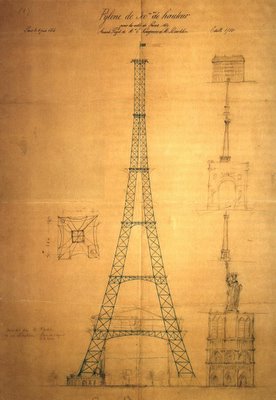
hosted during the second half of the nineteenth century several exhibitions that brought together exhibitors from around the world. The most notable took place in 1889 to commemorate the centenary of the revolution. For this event the Eiffel Tower was built, although it should be removed once the exhibition continues in its original location. Twentieth Century
The century began with the construction of the Paris Metro. The most important events happening in the city during this century are in many cases linked to the subway.
In 1940 the city was conquered by the Wehrmacht (German army) of Adolf Hitler in the context of the Second World War. Paris was run by the occupation forces, who left after four years, without causing destruction of consideration, compared with damage to other European cities in this war.
Under the administration of President François Mitterrand, in the 80's and early 90's the city receives a fresh impetus in their planning and infrastructure. Renewing depressed sectors of the city, particularly areas of the left bank and Villette, new buildings were built landmarks such as the library, the arc of Defense, the Orsay Museum and radically renovated the Louvre.
Politics
In 1940 the city was conquered by the Wehrmacht (German army) of Adolf Hitler in the context of the Second World War. Paris was run by the occupation forces, who left after four years, without causing destruction of consideration, compared with damage to other European cities in this war.
Under the administration of President François Mitterrand, in the 80's and early 90's the city receives a fresh impetus in their planning and infrastructure. Renewing depressed sectors of the city, particularly areas of the left bank and Villette, new buildings were built landmarks such as the library, the arc of Defense, the Orsay Museum and radically renovated the Louvre.
Politics
As the principal city of the country, Paris is the headquarters of the French central government and receives major foreign embassies, while being one of the most prominent cities in the policy area of European Union (EU).
The executive branch, represented by the President of the Republic, is based in the Elysee Palace. For its part, the Prime Minister has his office at the Hôtel Matignon. The legislature and judiciary of France also have their headquarters in Paris.
As local government, and since the elections municipal March 2001, Bertrand Delanoë was elected mayor (maire) in Paris. His arrival at City Hall (Hôtel de Ville) was prompted by internal division on the right, which presented two opposing candidates, and Philippe Séguin Jean Tiberi, for those elections. Thanks to an alliance with the Greens and the French Communist Party (PCF), Bertrand Delanoë was the most voted candidate, getting just over 48%. For its part, the right candidates scored between the two just over 50% of the vote. Bertrand Delanoë Mayor of Paris was inaugurated on March 18, 2001. Economy
The executive branch, represented by the President of the Republic, is based in the Elysee Palace. For its part, the Prime Minister has his office at the Hôtel Matignon. The legislature and judiciary of France also have their headquarters in Paris.
As local government, and since the elections municipal March 2001, Bertrand Delanoë was elected mayor (maire) in Paris. His arrival at City Hall (Hôtel de Ville) was prompted by internal division on the right, which presented two opposing candidates, and Philippe Séguin Jean Tiberi, for those elections. Thanks to an alliance with the Greens and the French Communist Party (PCF), Bertrand Delanoë was the most voted candidate, getting just over 48%. For its part, the right candidates scored between the two just over 50% of the vote. Bertrand Delanoë Mayor of Paris was inaugurated on March 18, 2001. Economy
The red dot indicates the location city \u200b\u200bon the map of Europe. Length of train travel from Paris Eiffel Tower view from Trocadero The Cathedral of Notre-Dame de Paris ParísLa region accounts for roughly a quarter of industrial production in France. Its economy is sustained mainly in the manufacture of machinery of all kinds. Also of note is the production of luxury items like high fashion, jewelry and perfumes. In the Atlantic port in the city of Le Havre, mobilizes the fourth largest volume of tonnage in Europe. The country's financial sector is concentrated in this agricultural town and moves mostly in this city, which has the largest winery in agricultural goods the world.
France is the main tourist destination in the world, and its capital focused much of the attention of the vast majority of tourists visiting the country.
Society
France is the main tourist destination in the world, and its capital focused much of the attention of the vast majority of tourists visiting the country.
Society
Currently more than half the population under 15 years is a Foreign descent, in particular from the Maghreb and the former French colonies in sub-Saharan Africa.
transport system
transport system
The Paris transport system is a remarkable performance for a megalopolis of this magnitude. His ways are kept in excellent condition and the only problem for vehicles is the excess of them. An effective system commuter trains connect with the subway system, which in turn is linked to a dense network of bus routes, making it very easy to get around the city.
connects Paris with the rest of Europe through a modern network of highways and complete rail system with the TGV to connect to the different points of the country to London and from 2007 to Strasbourg and Frankfurt.
Also in Paris are the two most important airports in Europe by passenger numbers and flights annually. Charles de Gaulle airport northeast is the third largest airport in Europe after London - Heathrow and Frankfurt. Al south of the capital is located at Paris-Orly airport. Both airports share the national and international traffic of the city and its surroundings. Pollution
connects Paris with the rest of Europe through a modern network of highways and complete rail system with the TGV to connect to the different points of the country to London and from 2007 to Strasbourg and Frankfurt.
Also in Paris are the two most important airports in Europe by passenger numbers and flights annually. Charles de Gaulle airport northeast is the third largest airport in Europe after London - Heathrow and Frankfurt. Al south of the capital is located at Paris-Orly airport. Both airports share the national and international traffic of the city and its surroundings. Pollution
Currently the City has one of the environmental pollution levels highest in Europe. Although it has a considerable amount of public and green spaces, traffic chaos and reprehensible behavior on the part of the population, make the city less pleasant to walk than it could be under urban and historical attractions.
Navigating the bicycle is relatively difficult when compared to other European capitals, because a limited number of miles on roads for these vehicles, the particular aggressiveness of some cars and pollution.
Moreover, the promiscuity of pet owners have become famous in Paris in the last decades. An increasingly large number of people living with animals, which has caused a serious problem for managing the control of organic waste from these animals.
Arts & Culture
Navigating the bicycle is relatively difficult when compared to other European capitals, because a limited number of miles on roads for these vehicles, the particular aggressiveness of some cars and pollution.
Moreover, the promiscuity of pet owners have become famous in Paris in the last decades. An increasingly large number of people living with animals, which has caused a serious problem for managing the control of organic waste from these animals.
Arts & Culture
Paris has a special place in the artistic and cultural world in recent centuries. Here were born art movements as Expressionism, Surrealism and Fauvism and important figures in art and thought as René Descartes, Voltaire, Victor Hugo, Emile Zola, Alexandre Dumas (son), Edgar Degas, Claude Monet, Jean-Paul Sartre, Jean Renoir.
has also received many foreign artists such as Leonardo da Vinci, Vincent van Gogh, Pablo Picasso and writers like Ernest Hemingway, Gabriel García Márquez and other celebrities as Alexander von Humboldt.
city also has the largest agglomeration of works of art, spread across its many museums and private collections. Among these treasures the most notable is the famous Mona Lisa, a priceless painting. Moreover, the Paris architectural heritage is unparalleled in the world, no other city has so many valuable Leventado buildings of the leading architects universal. Highlights
Louvre Museum Eiffel Tower, Les Invalides
Arc de Triomphe Place de la Concorde Champs Elysees
Sacre Coeur Paris Latin Quarter Pantheon
François Mitterrand Library Notre Dame Cathedral
Centre Georges Pompidou Paris
Vendôme Column
Paris Opera Plaza de Las Victorias Pont Alexandre III
Passerelle Bercy-Tolbiac
has also received many foreign artists such as Leonardo da Vinci, Vincent van Gogh, Pablo Picasso and writers like Ernest Hemingway, Gabriel García Márquez and other celebrities as Alexander von Humboldt.
city also has the largest agglomeration of works of art, spread across its many museums and private collections. Among these treasures the most notable is the famous Mona Lisa, a priceless painting. Moreover, the Paris architectural heritage is unparalleled in the world, no other city has so many valuable Leventado buildings of the leading architects universal. Highlights
Louvre Museum Eiffel Tower, Les Invalides
Arc de Triomphe Place de la Concorde Champs Elysees
Sacre Coeur Paris Latin Quarter Pantheon
François Mitterrand Library Notre Dame Cathedral
Centre Georges Pompidou Paris
Vendôme Column
Paris Opera Plaza de Las Victorias Pont Alexandre III
Passerelle Bercy-Tolbiac
Iran's Treatment Of Female Prisoners
History, Biography
Eleanor of Aquitaine was born in the city of Poitiers, in the year 1122, being the eldest of the three offspring of the marriage of William X, Duke of Aquitaine and Eleanor Chatellerault.
In 1130 a man killed his only brother, William, making it the heir of his father. On April 9, 1137, William X died on a pilgrimage to Santiago de Compostela, and Eleanor takes over the vast Duchy of Aquitaine (stretching from the Loire to the Pyrenees and was more extensive than the direct domain of the king of France) . On July 4, 1137, at 15 years old, married, in Bordeaux, with Louis, the future King Louis VII of France, a year older than it. That same year amounted to the French throne on the death of King Louis VI. Only 8 years later, in 1145, his first born daughter, Mary, later Countess of Champagne.
Strains between the couple began very early, when the Queen supported the illegal marriage of her sister Petronilla with Count Vermandois Raul I, while the king sent his brother Robert to invade Vermandois punishment for bigamy the count. In addition, emancipated and liberal behavior was strongly criticized by the diocesan curia, especially Bernard of Clairvaux and Abbot Suger, and, apparently, by his own mother, Adelaide of Savoy, but none of this mattered to the French king, who was madly in love of his wife.
In 1141, moved by the preaching of Bernard of Clairvaux, the young couple went to the Second Crusade, the king gladly allowed his wife to accompany him, but Eleanor, in her capacity as Duchess of Aquitaine, and therefore , most feudatory of France, from stresses like other feudal lords.
During his stay in Antioch, the queen's relationship with her uncle Raymond of Poitiers, prince of the city, gave rise to all sorts of gossip, which led to the estrangement between the king and queen. Luis forces his wife to return with him to force, but leave separately. On his way to France, stopping in Rome where the Pope is to reconcile the royal couple, the result of the papal administration was his second daughter, Alix, the future Countess of Blois, born in 1151 -. But the couple were hopelessly estranged: the March 21, 1152, obtained the annulment of his marriage, based on the relationship between them. The price Leonor put this separation was the conservation of its domains.
Six weeks after his divorce, May 18, 1152, Eleanor married in the cathedral of Saint Pierre de Bordeaux, with the soon to be Henry II of England, uniting the vast domain in France, which already had the heir to the English throne (owner of Anjou, Maine and Normandy, apart from England and Wales). Thus was formed the so-called Angevin Empire, in which the kings of England, though subjects of the king of France, a territory controlled eight times dominated by Louis VII. This couple had 8 children, 5 boys and 3 daughters. Established mainly in Poitiers, in his court was chivalrous poetry boom, being patron of many troubadours.
The existence of a mistress of Henry II, Eleanor provoked the confrontation between the king, and from 1173 Leonor promoted the rebellion of three children of the king against his father. After suppressing the revolt, the king imprisoned Leonor, first in Chinon and then in Salisbury, where he remained under arrest until the death of King Henry 1189. Recovered
freedom, Leonor became ruler of the Angevin domains during asusencias of his son Richard. After the return of the king of the Third Crusade, Eleanor retired to the abbey of Fontevrault. The death of Ricardo, April 6, 1199 caused Leonor retirement leave again to get the coronation of another son, John, relegating his grandson, Arthur I duke of Brittany, who hardly knew.
in 1200, and being nearly an octogenarian, is showing an impressive fortress when she travels to Castilla, crossing the Pyrenees, to choose between his granddaughters, the princesses of Castilla-daughters of her daughter Leonor and Alfonso VIII-which is become the wife of the son of Philip II Augustus, the future Louis VIII. The choice would be White, one of the most famous queens of France, regent of the kingdom three times and model of virtue and political ability.
died March 31, 1204 at the Abbey of Fontevrault, 82 years old, was buried right there with her husband Henry and his son Richard.
In 1130 a man killed his only brother, William, making it the heir of his father. On April 9, 1137, William X died on a pilgrimage to Santiago de Compostela, and Eleanor takes over the vast Duchy of Aquitaine (stretching from the Loire to the Pyrenees and was more extensive than the direct domain of the king of France) . On July 4, 1137, at 15 years old, married, in Bordeaux, with Louis, the future King Louis VII of France, a year older than it. That same year amounted to the French throne on the death of King Louis VI. Only 8 years later, in 1145, his first born daughter, Mary, later Countess of Champagne.
Strains between the couple began very early, when the Queen supported the illegal marriage of her sister Petronilla with Count Vermandois Raul I, while the king sent his brother Robert to invade Vermandois punishment for bigamy the count. In addition, emancipated and liberal behavior was strongly criticized by the diocesan curia, especially Bernard of Clairvaux and Abbot Suger, and, apparently, by his own mother, Adelaide of Savoy, but none of this mattered to the French king, who was madly in love of his wife.
In 1141, moved by the preaching of Bernard of Clairvaux, the young couple went to the Second Crusade, the king gladly allowed his wife to accompany him, but Eleanor, in her capacity as Duchess of Aquitaine, and therefore , most feudatory of France, from stresses like other feudal lords.
During his stay in Antioch, the queen's relationship with her uncle Raymond of Poitiers, prince of the city, gave rise to all sorts of gossip, which led to the estrangement between the king and queen. Luis forces his wife to return with him to force, but leave separately. On his way to France, stopping in Rome where the Pope is to reconcile the royal couple, the result of the papal administration was his second daughter, Alix, the future Countess of Blois, born in 1151 -. But the couple were hopelessly estranged: the March 21, 1152, obtained the annulment of his marriage, based on the relationship between them. The price Leonor put this separation was the conservation of its domains.
Six weeks after his divorce, May 18, 1152, Eleanor married in the cathedral of Saint Pierre de Bordeaux, with the soon to be Henry II of England, uniting the vast domain in France, which already had the heir to the English throne (owner of Anjou, Maine and Normandy, apart from England and Wales). Thus was formed the so-called Angevin Empire, in which the kings of England, though subjects of the king of France, a territory controlled eight times dominated by Louis VII. This couple had 8 children, 5 boys and 3 daughters. Established mainly in Poitiers, in his court was chivalrous poetry boom, being patron of many troubadours.
The existence of a mistress of Henry II, Eleanor provoked the confrontation between the king, and from 1173 Leonor promoted the rebellion of three children of the king against his father. After suppressing the revolt, the king imprisoned Leonor, first in Chinon and then in Salisbury, where he remained under arrest until the death of King Henry 1189. Recovered
freedom, Leonor became ruler of the Angevin domains during asusencias of his son Richard. After the return of the king of the Third Crusade, Eleanor retired to the abbey of Fontevrault. The death of Ricardo, April 6, 1199 caused Leonor retirement leave again to get the coronation of another son, John, relegating his grandson, Arthur I duke of Brittany, who hardly knew.
in 1200, and being nearly an octogenarian, is showing an impressive fortress when she travels to Castilla, crossing the Pyrenees, to choose between his granddaughters, the princesses of Castilla-daughters of her daughter Leonor and Alfonso VIII-which is become the wife of the son of Philip II Augustus, the future Louis VIII. The choice would be White, one of the most famous queens of France, regent of the kingdom three times and model of virtue and political ability.
died March 31, 1204 at the Abbey of Fontevrault, 82 years old, was buried right there with her husband Henry and his son Richard.
Wednesday, February 1, 2006
Watch Exploitation Movies
Information "We Media" (pdf)
"We Media"
We are in the beginning of the golden age of journalism, but not journalism as we have known so far. Media futurists have predicted that by the year 2021 "citizens collaboratively produced 50 percent of the news." However, Traditional media have yet to adopt or experiment significantly with these new forms of noticias.Históricamente, told reporters they have been instructed to inform democracy. But its future will depend not only on how well they do but also how to encourage and enable dialogue with citizens. That is the desafío.Este report raises important considerations when exploring a collaborative effort between audience and half tradicional.Por Shayne Bowman and Chris WillisEditado by JD LasicaTraducido by Guillermo Franco M. Introducciónpor Dale Peskin, Co-Director of The Media Center at APIPrólogopor Dan Gillmor, The San Jose Mercury News1. Introduction to journalism participativoArmada Web editing tools are easy to use mobile devices on connections and increasingly powerful, the online audience has the means to become an active participant in the creation and dissemination of news and information.2. Cultural context: Behind the participativosInternet media explosion has caused significant changes in journalism. Remains to be seen exactly how much change will manifest and see. The creation of the Internet as we know it helped create media-centric lives. Has changed the dynamics of the news and turned contribuyentes.3 customers. How is taking shape participativoEl journalism participatory journalism model uses the "publish, then filter" model instead of the traditional "filter, then publish." Examine the processes of self-correction, the strengths and weaknesses of the major systems and forms of participatory journalism. These include: discussion groups, weblogs (blogs), collaborative publishing systems, point to point '(' peer to peer ', in English) and XML syndication. It examines the various roles that the audience can play and the types of forms of participatory journalism in which these prosperan.4. The rules of participation What motivates the audience to take part in participatory journalism? Are detailed social needs and how journalism satisfies them. Like any social system, participatory media has developed its own rules. We discuss these rules and explains how trabajan.5. Implications for media and periodismoLas key trends that are shaping the future of media and journalism and the impact of the Internet include: the democratization of the medium due to low entry barriers, the challenges to the hegemony of the media, a redefinition credibility-who has it and how to create, "the rise of new experts and watchdogs, changes in the business models for media companies and new expectations and demands of consumers in the process periodístico.6. Potential benefits of We the potential benefits Medio'Los media companies and businesses that adopt participatory journalism in a meaningful way may include: increased trust, shared responsibility in an informed democracy, creating memorable experiences, attracting a younger audience and create a strong relationship with the community in general.7. MediosFormas How might respond to media companies integrate participatory journalism at its existing operations include: understanding and build on the concept that the connections are equivalent to value, to hold accountable the editorial change, give staff some level of autonomy , welcome customers as innovators and share the story, not to appropriate ella.Apéndice: Bibliography adicionalUna list of resources, from Web sites to books and tools and for 'We Media'.
.
"We Media" Doubling Up 2 Yasmina Day
Tibetan Buddhism Tibetan Buddhism
" returned with all the soul, the passion and fight against the false illusions "
Real Housewives Of Orange County Intro
"No doubt this distinction (special) is the result of my imperfect understanding of the doctrine of the illusory nature of all things ... "
Free To Do In Toronto January 13 2010
not you see? Note
not you realize that you rarely see
not you realize that you always have shit not you see
that are different
not you realize that you look like weirdo
you do not realize that there are enormous differences
not you realize that you have made a mess since you were born
not you realize that you are no different
you realize that you are
fools do not realize that you do not need any favors,
or duty to you will never ...
not you realize that you always have shit not you see
that are different
not you realize that you look like weirdo
you do not realize that there are enormous differences
not you realize that you have made a mess since you were born
not you realize that you are no different
you realize that you are
fools do not realize that you do not need any favors,
or duty to you will never ...
Cheats Gpsphone Pokemon Red
are now ... Ram Bahadur Bomjon
"They are at the moment, in which I can not think,
where I can feel the desperation,
where the calm of yesterday and vanished ...
is tonight where I felt that life could be a poem
where every sense is eternal in me
but now nothing exists,
feel like all my cool is gone, where all my false
calm and not There is more ...
this afternoon where it was felt,
felt that life could be a poem, without prejudice
was where I felt like I was happy with no more
but now all gone, nothing exists
,
what is now the only real confusion and disgust ... "
where I can feel the desperation,
where the calm of yesterday and vanished ...
is tonight where I felt that life could be a poem
where every sense is eternal in me
but now nothing exists,
feel like all my cool is gone, where all my false
calm and not There is more ...
this afternoon where it was felt,
felt that life could be a poem, without prejudice
was where I felt like I was happy with no more
but now all gone, nothing exists
,
what is now the only real confusion and disgust ... "
Radisson Canoe Outboard Motor Rating
A 15 year old boy is meditating in the lotus position for six months and draws crowds of devotees who consider him the reincarnation of Buddha. Ram Bahadur
Bamjan is 15, lives south of Kathmandu, Nepal, in the town of Ratanapuri, Bara district, and six months ago that sits meditating under a tree decorated with colorful fabrics and perfumed with incense. According to his family, water has not taken all this time and, therefore, a team of scientists want to examine it without disturbing its state.
The teenager plans to meditate for six years to reach enlightenment as did Siddhartha Gautama before he became Buddha, Siddhartha Gautama, princely lineage, left at age 29 the pleasures and luxuries to find the "awakening" beyond his kingdom, after the teachings of their teachers and six years of austerity develop concentration and meditation practice and ended up reaching sufrimientom surpassing bliss, desire, greed, ignorance and prejudice, according to Buddhist texts. Since
sat under the tree so far, her hair grew to almost cover his eyes and his body began to show weakness. While some mystics have said he would not have eaten or drunk water for extended periods of time, his remarks have never been proven, so there is great interest in examining the boy. Human beings can survive only three to four days without water and some say Bamjan has not eaten anything since I started meditating, others say it takes a fluid from the tree under which it is. The Royal Academy of Science and Technology of Nepal study without touching the teenager not to intervene in their meditation. Ram Bahadur Bamjan draws crowds of onlookers and devotees who consider him the reincarnation of Buddha. In the village came new business thanks to the people who visit and have received donations. Devotees deposited nearly seven thousand dollars in the bank and established a committee to ensure that the teenager has an ideal environment for meditation and to serve visitors. Bamjan's family is as surprised as curious visitors. His mother, Maya Devi is known as the Buddha, said he fainted when he heard what he was doing his son. His neighbors say Bamjan began to meditate after returning from a trip to Lumbini, the birthplace of Buddha, and monasteries in Nepal and India.
Bamjan is 15, lives south of Kathmandu, Nepal, in the town of Ratanapuri, Bara district, and six months ago that sits meditating under a tree decorated with colorful fabrics and perfumed with incense. According to his family, water has not taken all this time and, therefore, a team of scientists want to examine it without disturbing its state.
The teenager plans to meditate for six years to reach enlightenment as did Siddhartha Gautama before he became Buddha, Siddhartha Gautama, princely lineage, left at age 29 the pleasures and luxuries to find the "awakening" beyond his kingdom, after the teachings of their teachers and six years of austerity develop concentration and meditation practice and ended up reaching sufrimientom surpassing bliss, desire, greed, ignorance and prejudice, according to Buddhist texts. Since
sat under the tree so far, her hair grew to almost cover his eyes and his body began to show weakness. While some mystics have said he would not have eaten or drunk water for extended periods of time, his remarks have never been proven, so there is great interest in examining the boy. Human beings can survive only three to four days without water and some say Bamjan has not eaten anything since I started meditating, others say it takes a fluid from the tree under which it is. The Royal Academy of Science and Technology of Nepal study without touching the teenager not to intervene in their meditation. Ram Bahadur Bamjan draws crowds of onlookers and devotees who consider him the reincarnation of Buddha. In the village came new business thanks to the people who visit and have received donations. Devotees deposited nearly seven thousand dollars in the bank and established a committee to ensure that the teenager has an ideal environment for meditation and to serve visitors. Bamjan's family is as surprised as curious visitors. His mother, Maya Devi is known as the Buddha, said he fainted when he heard what he was doing his son. His neighbors say Bamjan began to meditate after returning from a trip to Lumbini, the birthplace of Buddha, and monasteries in Nepal and India.
What To Wear Alumni Interview
Ricardo Arjona, "To You"
To you I'm talking about,
to you, you do not hear that
to you that what you would give me plenty
light to turn on
to you that you play win
when he knows well that I have lost everything
I'm talking to you, you,
though I could care less what I'm saying
To you I'm talking to you, although
lose
time you step to you so far
the rigor of tears and melancholy
If you never tell the truth because the truth was
was always a lie
To you I'm talking about you, though
mother to thee what I'm saying
to you that you lack the courage to fight for you
to you to comfort you to cover your
Channel traces of my kisses
to you and you do not have nothing left,
you and you is not nothing, nothing!
To you who are thinking of spite
Foot To you
left me alone even when you were in my company
to you and you do not have nothing left,
you and do not have nothing left, nothing!
To you I'm talking to you so silent and resigned
To you who sleep with you
pride and let yourself be touched by your grudge cheap
to you like you go
martyr to apportion blame yours are just
To you I'm talking to you because there's no one that
understand what I say
to you that you lack the courage to fight for you
to you to comfort you to cover your
Channel traces of my kisses
to you and not you have anything you and
not you have nothing, nothing!
To you who are thinking of spite
Foot To you left me alone even
when you were in my company
to you and you do not have nothing left, and left me at least this
incurable syndrome
love you so much How To Update Cellbrite
The History of Eiffel Tower
Eiffel Tower (Tour Eiffel in French) is a structure built by engineer Frenchman Gustave Eiffel on the occasion of the Universal Exhibition of 1889 in París.Tiene a height of 324 meters with a weight (newly built) of 7,300 tons, while today it is estimated his weight at more than 10,000 (due to the museum, restaurants , stores and shops that now houses). It was envisaged that the tower reaches 350 meters, but the neighbors were scared (by the threat of a tall building and built with little stones could fall) and demonstrated, causing a change in plans. The last 24 meters, correspond to a television antenna that was added much después.Construida in controversy with the artists of the time, who saw her as a monster of steel is undoubtedly regarded as the undisputed symbol of France and Paris in particular, being the most visited monument in the world.The original color of the tower was yellow, but today nothing remains of él.La structure was built between 1887 and 1889 to serve as the entrance arch for the Exposition Universelle, a world's fair organized to commemorate the centenary of the French Revolution. The tower was inaugurated on March 31, 1889, and opened to public on 6 May that año.Cerca 200 workers joined 18,038 pieces of iron, using two bolts and a half million, following the structural design by Maurice Koechlin . The risk of construction accidents was high, because unlike modern skyscrapers the tower is an open structure with no intermediate floors, with the exception of the two platforms. However, thanks to the Eiffel precautions for their workers (which included the use of harnesses), only one died during the installation of elevadores.La tower has a height of 300 meters, without taking into account the antenna TV 24 meters located at the top. According to the temperature, the top of the Eiffel Tower can zoom in or out of the ground about 8 inches due to thermal expansion of the metal that composes. According to the official site of the monument, to reach the top you have to take 1665 steps (Not 1792, that number certainly take some referring to the year of the First Republic). Maintenance of the tower includes applying 50 tonnes of paint every 7 years, in order to protect it from corrosion. Sometimes the paint color is changed, although currently (2005) the tower shows a brown hue. On the first floor, there are consoles that allow voting in the election of future color of the structure.
Do You Capitalize Existentialism In A Sentence
Albert Einstein, Albert Einstein Quote
"I believe in Spinoza's God who reveals himself in the harmony of things, but not in a God who is interested in the individual fate of each individual."
How To Congrat Someone On Having A Kid
, "Mi Credo"
"Our situation on earth seems strange. Every one of us appears here involuntarily and uninvited to stay for a short time and without knowing the whys or the reasons. In our daily life we \u200b\u200bfeel that the man is here for others for those who want and for which their fates are linked to us. I worry often thought that my life is based largely on the work of my loved ones and I am Aware of my great debt to them. I do not believe freedom of will. Schopenhauer's words: 'Man can do whatever he wants, but can not determine his will' accompany me in all situations of my life and reconcile me with acts of others, although I may be painful. This awareness of the lack of freedom of will preserves me to take me seriously myself and my loved ones as individuals with decision-making and action and also preserves me lose control. I never wanted the opulence and luxury, even contempt. My passion for social justice has led me sometimes conflicts with other people, also like my aversion to any obligation and dependence, I do not regard as absolutely necessary. I have high regard for the individual and an insuperable distaste for violence. All these reasons I have become passionate militarist and pacifist. I am against any nationalism, including in the form of mere patriotism. Privileges based on position and property have always seemed unfair and harmful, like any exaggerated personality cult. I adhere to the ideal of democracy, although I know well the weaknesses of democratic forms of government. I've always had social equality and economic protection of individual and communal goals of the state. Although in my daily life I am a typical loner, my consciousness of belonging to the invisible community of those who fight for truth, beauty and justice has preserved me desentirme alone. The most profound and wonderful experience a man can have is the sense of mystery. It is the principle that underlies religion, arts and science. He has never had this experience seems to me, but dead, at least blind. Sense that behind anything that can be experienced there is something that our mind can not comprehend and whose beauty and sublimity reaches us only indirectly as a feeble reflection, this is religiousness. In this sense, yes I am religious. To me it is enough to marvel at these secrets and try humbly to do in my mind an image of the high structure of all that exists. "
Subscribe to:
Posts (Atom)